
RLC Summit — Featured Industry Speakers

Momchil Dimchev
Engineering Manager - High Voltage Disconnect Units
Sensata Technologies
Hengelo, Netherlands
Applying RLC in a Running System‑Level Program in Automotive New Product Development
(Co-Presenter with Olti Pjetri)
To improve program execution, strengthen cross‑functional decision‑making, manage backlog more effectively, and maintain focus on a Minimum Viable Product, Sensata Technologies piloted RLC in a high‑profile automotive program.
The team balanced ongoing deliveries with limited resources while introducing a shift in culture and ways of thinking. Close cross‑disciplinary collaboration and strong senior‑management engagement were essential.
The pilot improved the team’s ability to identify, prioritize, and make decisions with major program‑level impact. It also enhanced collaboration across teams and stakeholders, while creating reusable knowledge libraries that now support future programs.
Momchil is the Engineering Manager leading the mechanical & integration R&D team in Hengelo, The Netherlands. Eleven years of experience in the automotive industry, with engineering and leadership roles in sensors, high‑voltage components, and disconnect units.
Structure, Coordination and Cooperation: Global Adoption of RLC in a Large, Decentralized Organization
Christoph Gregoir will share his experience on a team that rolled out RLC across seven divisions with hundreds of project leaders that share a strong culture but decentralized organizational structures and processes. He'll share the tactics that worked, the obstacles they had to overcome, and the results they achieved.
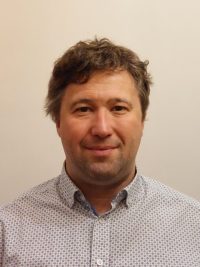
Christophe Gregoir
Team Coach Engineering Heat to Power
Atlas Copco
Antwerp, Belgium
Christophe Gregoir is a Program Leader at Atlas Copco, where he helps project teams develop better products faster by strengthening collaboration, decision‑making and project flow. He leads a cross‑functional team that improves project work, while staying closely connected to day‑to‑day reality by managing a project himself.
With a Master’s degree in Electromechanical Engineering from KU Leuven and more than twenty years of experience in product development, he has worked with Atlas Copco product companies worldwide as a project engineer, design reviewer engineering team leader and project leader. He now focuses on transforming how teams run projects and make key decisions together. Christophe applies Knowledge‑Based Development and the Rapid Learning Cycles framework, helping teams structure the unknown, reduce uncertainty and maintain steady progress. His passion is enabling effective teamwork and solving complex product development puzzles.
Martijn Kuitert
Technical Product Manager EV Charging
Alfen
Almere, Netherlands
Rapid Learning Cycles in Alfen's Agile Transformation
Applying RLC in a Running System‑Level Program in Automotive New Product Development
(Co-Presenter with Momchil Dimchev)
To improve program execution, strengthen cross‑functional decision‑making, manage backlog more effectively, and maintain focus on a Minimum Viable Product, Sensata Technologies piloted RLC in a high‑profile automotive program.
The team balanced ongoing deliveries with limited resources while introducing a shift in culture and ways of thinking. Close cross‑disciplinary collaboration and strong senior‑management engagement were essential.
The pilot improved the team’s ability to identify, prioritize, and make decisions with major program‑level impact. It also enhanced collaboration across teams and stakeholders, while creating reusable knowledge libraries that now support future programs.

Olti Pjetri
Chief Design Engineer
Sensata Technologies
Hengelo, Netherlands
Olti is the Chief Engineer for High‑Voltage Disconnect Units in electric truck applications. He holds a background in Electrical Engineering and has been with Sensata for eight years, serving in Design Engineering and Leadership roles.

Erik Quijano
Founder & CEO
Xantage
Stockholm, Sweden
RLC Spark!
RLC Spark! is a purpose-trained LLM designed to support the Rapid Learning Cycles framework for beginners to advanced users with large libraries of Key Decision and Knowledge Gap reports. He'll share the experience of building it, and what we learned along the way about using AI tools to extract reusable knowledge from teams that have used Rapid Learning Cycles.
Rapid Learning Cycles for Systems Engineering
Edwin Schumacher will share his work to use Rapid Learning Cycles to support the work of Systems Engineers in developing platform and product architectures for complex products.
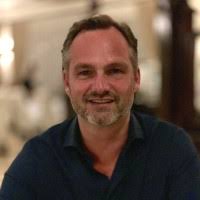
Edwin Schumacher
Managing Partner
Synergio B.V.
Vught, North Brabant, Netherlands
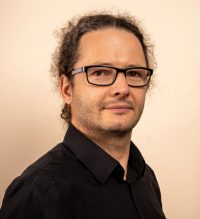
Michal Witkowicz
Product Engineer
Fokker Services Group
Amsterdam, Netherlands
How a systematic approach to problem solving creates a knowledge offset to speed up your next project.
Ad hoc fixes and quick patches help meeting deadlines. While most teams consciously accept risk carried by knowledge debt accumulation, many overlook a missed opportunity. By not solving problems systematically and completely, you often deprive your next project from the knowledge that could significantly cut development time of your next product. LAMDA is a systematic problem-solving approach that helps create reusable knowledge to benefit your future projects.
RLC Summit — Pre-Conference Workshops
Morning Session:
From Learning Cycles to Execution Cycles: The Transition from Early to Mid and Late Development
Deliverables, gate reviews, CAD models, test plans, system prototypes and more are all essential to the product development process by documenting and sharing the full set of decisions necessary to take a product into production.
This pre-conference workshop pulls together our most recent experiences with integrating the “just do it” work of product development into the Rapid Learning Cycles framework to build integrated, action-oriented plans, without losing the critical shift from “doing” to “learning” that drives acceleration through better decision making.
You’ll learn when and how to integrate these so-called “execution tasks” into your Learning Cycles plan (and when you shouldn’t), how to handle the transition from concept to feasibility to design, and how to use an Agile Integration Train to coordinate when it’s time to move out of the lab, and into production.

Katherine Radeka
Managing Director
Rapid Learning Cycles B.V.
Moordrecht, South Holland, Netherlands
Afternoon Session:
How to Write Better Key Decision and Knowledge Gap Reports
In this workshop, we’ll work with you to write better Key Decision and Knowledge Gap reports. You will work on a small project of your own choosing, which may be personal or professional, in a small group. We’ll cover:
–How to strengthen your Key Decision or Knowledge Gap question
–How to write a strong Purpose Statement that builds credibility for your recommendation
–How to use charts, graphs, images, etc. more effectively to illustrate your learnings
–How to write a solid recommendation and socialize it with decision makers.
You’ll leave with a model report and a review checklist that you can use to work with your teams to improve their Key Decision and Knowledge Gap reports to support real-time knowledge capture and stronger decision making.
Ingvar Hendriks
Projectmanager/Owner
Hendriks Interim Management
Rutten, Flevoland, Netherlands
FREE — Afternoon Session:
Rapid Learning Cycles Experience: Key Decisions and Knowledge Gaps
This interactive session has been designed specifically to explain why and how the Rapid Learning Cycles framwork accelerates innovation through better decision making, and introduce the core concepts within the framework.
Attendees will learn how to recognize Key Decisions and Knowledge Gaps, and know what to do with them whether they are working as part of a team or just want to make better decisions for themselves.
If you are attending the summit to learn more about Rapid Learning Cycles but have no experience with the framework itself, this will prepare you to get the most from the following day. It's free, but does require pre-registration, as seats are limited.
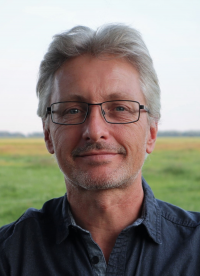
Ingvar is a Senior RLC Consultant and Certified RLC Instructor, with over 20 years of experience improving his clients’ project and innovation management. He is especially interested in managing creative processes and the interactions between marketing and product development.
He has a strong desire to help accelerate the transition to a more sustainable future and circular economy.
Introduction and Welcome
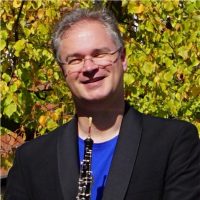
Jan is a Rapid Learning Cycles Project Associate.
He's also an
Jan Vaessen
Owner/ Facilitator
Jan Vaessen Facilitation
The Randstad, Netherlands